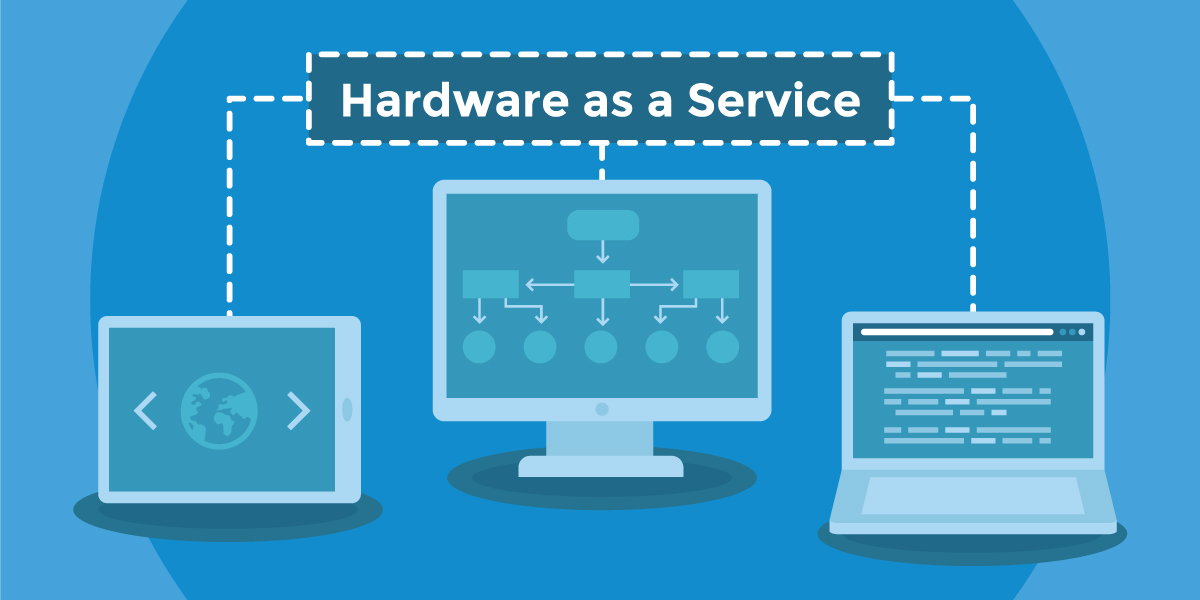
Vechtech Solutions, a Long Island based IT Solutions company has just launched their HaaS program.
What is Hardware–as–a–Service?
Hardware–as–a–Service, which clearly has roots in Software-as–a–Service, is a business model where companies sell packages that include hardware, software, maintenance and, sometimes, installation, for a monthly fee. Under HaaS, customers pay for services, not Things; consequently, HaaS contracts often include a service-level agreement (SLA).
The advantages of HaaS
HaaS transforms an up-front capital expenditure into an ongoing operating expense, which also allows for more accurate cost/value comparisons: e.g. “Is this worth $X/month to me?” Operating expenses become cheaper through shared use, especially for Things we don’t always use: e.g. bike/car sharing.
There is less worry about maintenance because of bundled-in servicing, which means any errors, bugs and other misbehaving gremlins become the headache of the hardware provider. Included servicing also caps the total cost of ownership: You know exactly how much it will cost for as long as you use it.
With HaaS, problems are fixed faster: Sometimes the hardware provider is not paid if the Thing is not operating (e.g. Hitachi’s trains), which incentivizes them to repair equipment quickly, even proactively (i.e. preventative maintenance). And there is less need to worry about obsolescence. You pay for the service, not the hardware; newer, cheaper hardware often enables the provider to offer a better service to you, which encourages them to upgrade.
HaaS changes the relationship between the vendor and customer.
HaaS also has advantages for IoT companies, just as software vendors benefited from SaaS. HaaS is easier to sell because of the lowered up-front cost. HaaS contracts generate predictable monthly revenue. HaaS plans create longer customer relationships, which can drive further sales. Bundling hardware, software, maintenance and installation improves margins: Pricing becomes a function of the value provided, not of the underlying (and diminishing) hardware costs. In other words, HaaS can be a shield against the endless march of hardware commoditization.